Why Credibility Should Be Treated as a Media Metric?
Published by Assured Advertising | 3 June 2026 | Blog
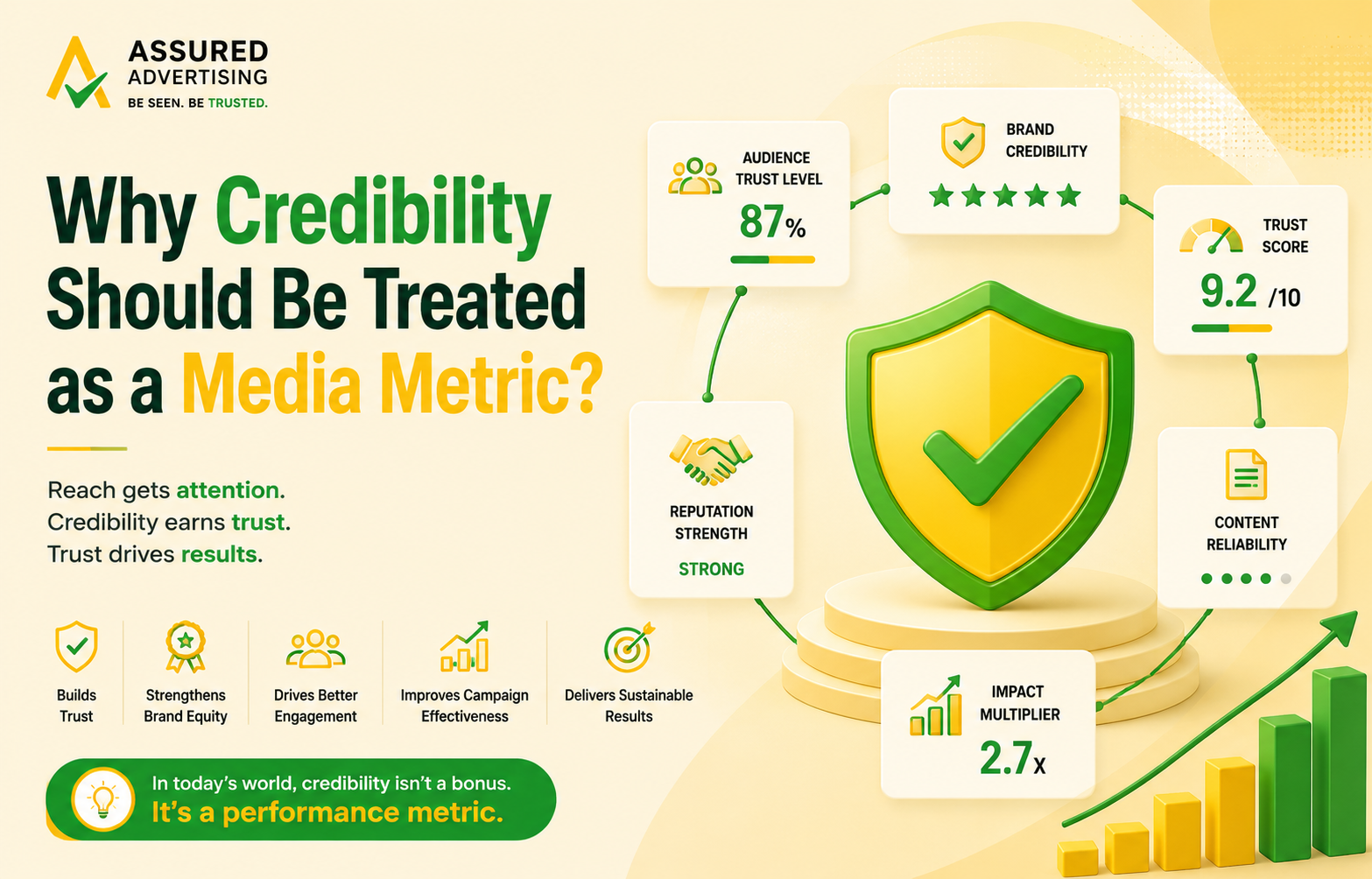
Most media plans are judged by numbers that are easy to count: reach, impressions, clicks, views, frequency, enquiries and conversions. These metrics matter, but they often miss one of advertising’s most valuable outcomes: trust.
In media planning strategy, credibility is the difference between being noticed and being believed.
A campaign can reach thousands of people and still fail to make the brand feel serious. An ad can generate impressions without creating confidence. A message can appear everywhere and still feel forgettable. This is why credibility in advertising should not be treated as a soft benefit. It should be measured as a serious media metric.
For brands in real estate, education, healthcare, finance, jewellery, retail and public communication, credibility directly influences whether people enquire, visit, recommend, invest or buy. Visibility gets the brand seen. Credibility gives that visibility weight.
Not Every Impression Has Equal Trust Value
In many advertising reports, impressions are treated as equal units. But audiences do not experience every ad equally.
A quick banner ad on a crowded website does not carry the same trust value as a prominent newspaper ad. A passing social media post does not feel the same as a hoarding at a prime city junction. A small digital placement does not create the same perception as a full-page campaign in a respected publication.
The placement changes the meaning of the message.
This is where traditional media advertising still holds strategic power. When a brand appears in a credible newspaper, premium magazine, high-traffic outdoor site, radio slot or television environment, it borrows authority from that space. The audience may not analyse it consciously, but the signal is clear: this brand is visible, serious and confident enough to show up publicly.
That signal has business value.
The Problem with Measuring Only the Final Click
Digital platforms are useful because they track actions clearly. But when brands measure only the final click, they often miss the channels that created confidence earlier.
A customer may see a newspaper ad in the morning, notice the brand on a billboard later, hear it on radio, and then search online at night. The conversion may be credited to digital, but the confidence may have been built through offline media.
That is why media measurement needs a wider lens.
If brands only reward the last action, they may undervalue the placements that made the action possible. Print, OOH, radio and television often create familiarity before intent becomes visible. They make the brand feel known before the customer formally responds.
A smarter campaign report should not only ask: How many people saw this? It should also ask: Did this placement make the brand easier to trust?
That question changes the way media is planned, bought and evaluated.
Credibility Turns Visibility into Market Authority
Visibility alone is not enough. A brand can be visible and still feel weak, random or temporary. Credibility turns visibility into market authority.
For a real estate brand, this means buyer confidence. For an education institute, it means parental trust. For a healthcare brand, it means reassurance. For a jewellery or retail brand, it means public familiarity. For a financial brand, it means seriousness.
This is why a good media buying agency should not simply buy space. It should understand what that space makes the brand mean.
A newspaper ad does more than deliver reach. It can signal legitimacy. A billboard does more than display a logo. It can create public presence. A radio campaign does more than repeat a message. It can make the brand familiar within a city. A magazine placement does more than showcase a product. It can shape premium perception.
For Assured Advertising, the value of a media plan is not only where the ad appears, but what that placement makes the brand represent in the market.
How Can Brands Measure Credibility Better?
Credibility may not fit neatly into a dashboard, but it can still be evaluated.
Brands can look at enquiry quality after high-trust media placements, direct searches during campaign periods, walk-ins after print and outdoor visibility, sales-team feedback, customer recall, dealer confidence and stronger response to digital campaigns after offline exposure.
These signals show whether a campaign is doing more than generating visibility. They show whether the brand is becoming easier to believe.
The strongest media plans do not chase numbers in isolation. They build a chain of trust across channels. Print creates seriousness. Outdoor creates public presence. Radio creates familiarity. Television creates scale. Digital captures intent. Together, they create a brand that feels visible, known and credible.
Conclusion
Credibility should be treated as a media metric because trust is one of advertising’s most valuable outcomes. Reach shows how far a campaign travelled. Credibility shows how much weight it carried.
At Assured Advertising, media is not viewed as space to be filled. It is treated as a strategic environment where brands build public presence, trust and long-term recall. Through print, OOH, radio, television and integrated media planning, Assured Advertising helps brands show up where visibility feels credible and attention carries authority.
In a market full of impressions, the brands that win are not always the loudest. They are the ones people believe.